The term ‘advanced practitioner’ is an umbrella term encompassing health and care professionals from a wide range of backgrounds who work at advanced practice level.
As healthcare demands continue to evolve, advanced practitioners (AP) play a crucial role in improving service delivery, fostering innovation, and addressing workforce challenges.
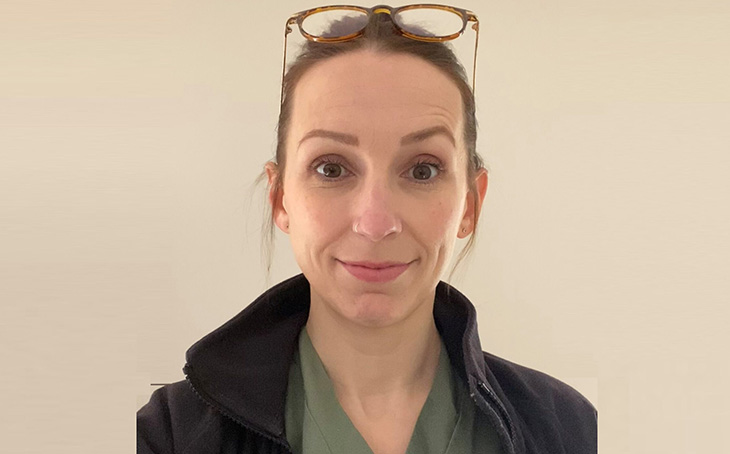
Roles can vary, but all commonly involve direct responsibility for high level complex decision making, including complete management of episodes of care. We spoke to Rachel Edwards, Advanced Practitioner Frailty Specialist, to find out more about her role.
“I qualified as a nurse 19 years ago and have been lucky enough to work in a wide range of places from busy wards to intensive therapy units (ITU) and high dependency units (HDU), as well as working a practice nurse in a GP surgery and then finding my way into community teams here at our trust.
“It was while working as a practice nurse that I discovered a real interest in elderly care, and this was only strengthened in my roles as a community stroke nurse and in the community frailty team. When an advanced practitioner role came up I was keen to apply.
“This role enables me to take my passion for frailty and focus on those living in care homes, to really grow in knowledge and influence around this group.
“Advanced practitioners need to complete a Masters and are required to work over four pillars: Leadership, Facilitation of Learning, Clinical Practice and Evidence, Research and Development
“I would describe myself as subject matter expert on care homes. For the past four years I have spent most days working in and around our local care homes, understanding how they work, the problems they face day to day, and where they need support.
“We have over 150 care homes and around 5,500 residents, and these individuals have very complex health needs. Care home residents offer a clinical challenge for those caring for them, with around 20% dying each year.
“Some advanced practitioner’s look more like a medic in how they practice and the skills they require, and the focus is quite clinical. My role sees me working in leadership – but with clinical responsibilities. I attend meetings and steering groups where discussions are had around how different organisations can work together to ensure those living in care homes are well looked after, and I also work clinically within care homes in our care home in reach service ‘Enhanced Health in Care Homes’. I really enjoy being able to impact on those living in care homes both with higher level strategy work as well as spending time with patients as a caregiver myself.
“The reason I get up for work and put my lanyard on every morning is because I am passionate about ensuring those living in care homes have access to the right care, at the right time and in the right place. I am personally driven to make sure that the care the frail receive is kind, proportionate and with their best interests at heart. In practice this means that most of my work revolves around admission avoidance.
“In terms of leadership, my typical day might include meetings around virtual health monitoring in care homes, attending the dementia steering group, chairing multi-organisational MDT meetings for complex patients, training colleagues on undertaking ReSPECT process, and working on webinars to provide education for those working in care homes. Clinically I might review a care home resident, look over their bloods and medication, discuss advanced care planning with them, speak to family about do not attempt resuscitation (DNAR) decisions and hospital avoidance, and undertaking advanced physical assessments, opportunistically assessing a resident with an infection and prescribing them antibiotics.
“Every day is different and I love what I do.”
More information on advanced practitioners can be found here.