
We recently hosted our 2026 Clinical Audit and Quality Improvement (QI) Awards, celebrating the outstanding improvement work delivered across our services over the past year.
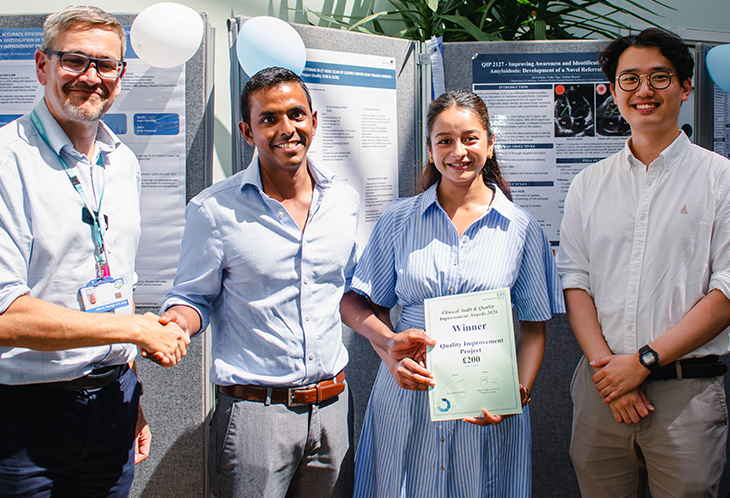
The event highlighted significant advances in patient safety, patient experience and clinical effectiveness, reflecting the dedication and innovation of teams across the organisation. This time we highlight the winner of the Clinical QIP category: Improving awareness and identification of cardiac amyloidosis:
Development of a novel referral pathway for cardiac amyloidosis
Cardiac amyloidosis is a progressive condition that can be difficult to recognise in its early stages, often resulting in delays to diagnosis and treatment. This quality improvement project aimed to address those delays by increasing awareness of early echocardiographic markers and creating a clear, reliable referral pathway for patients with suspected disease.
Using a series of Plan-Do-Study-Act (PDSA) cycles, the team worked with cardiac physiologists and registrars across Eastbourne District General Hospital and Conquest Hospital to improve identification, investigation and referral processes.
Key interventions included:
- Delivering targeted education sessions covering both cardiac and non-cardiac features of amyloidosis
- Introducing a visual reference poster in echocardiography reporting rooms to act as a prompt during routine reporting
- Developing a standardised diagnostic algorithm outlining the appropriate pathway for blood and urine testing, haematology referral and specialist DPD bone scintigraphy
- Establishing a prospective digital registry to track patients from initial suspicion through to diagnosis
Data collected between November 2025 and April 2026 demonstrated significant improvements:
- Staff achieved a 98% accuracy rate in a follow-up knowledge assessment six months after training
- The pathway identified 11 patients with suspected cardiac amyloidosis who may otherwise have been missed
- Two patients were subsequently diagnosed with cardiac amyloidosis and commenced disease-modifying treatment
- The remaining patients continue to undergo investigation, with one patient safely ruled out
These results demonstrate the value of combining education, standardised pathways and robust patient tracking to improve the early detection of a serious and often under-recognised condition. Earlier diagnosis provides patients with faster access to specialist care and treatments that can significantly improve outcomes.
The team’s next steps include expanding the education programme across the wider cardiology department, enhancing referral documentation to include extra cardiac symptoms such as carpal tunnel syndrome and renal disease, strengthening collaboration with haematology colleagues, and exploring the development of a local amyloid clinic hub to reduce the need for patients to travel to specialist centres in London.