
Why Rehab Can’t Wait
This week marks Rehabilitation Awareness Week, providing an opportunity to celebrate the life-changing impact rehabilitation has on our patients and recognise the vital work of rehabilitation teams across East Sussex Healthcare NHS Trust.
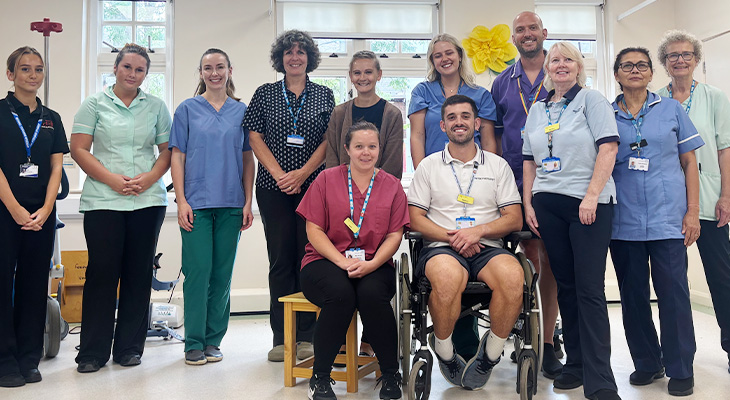
Rehabilitation colleagues
This year’s national theme, “Rehab Can’t Wait” led by the Chartered Society of Physiotherapy, highlights the importance of providing rehabilitation as early as possible to support recovery, maximise independence and help people achieve the best possible outcomes.
Across our trust , rehabilitation professionals work alongside patients, families and colleagues to help people recover following illness, injury or surgery, manage long-term conditions and regain mobility, confidence and independence. Every day, staff are helping patients achieve goals that matter most to them, whether that’s walking independently, communicating more effectively, returning home safely or simply enjoying everyday activities once again.
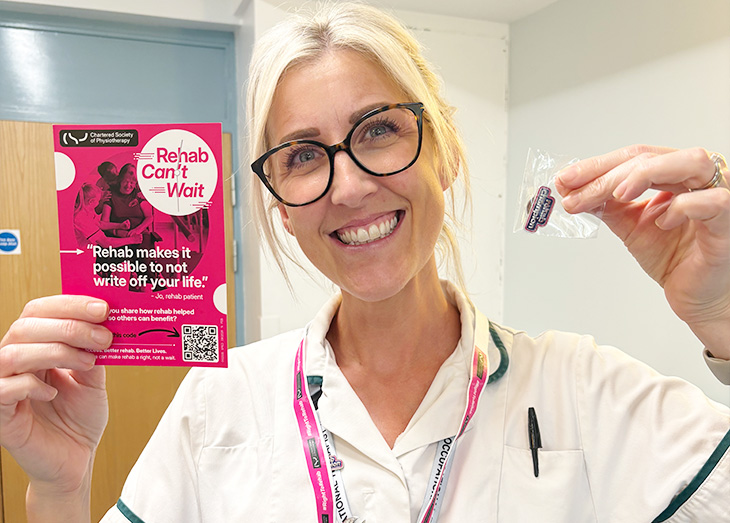
Rehab Can’t Wait – led by the Chartered Society of Physiotherapy
Hear from our staff talk about their roles in rehabilitation at East Sussex Healthcare NHS Trust in the video below.
Patient Voices: The Difference Rehabilitation Makes
Patients at both Bexhill Irvine Unit and Rye, Winchelsea and District Memorial Hospital have been sharing their experiences of rehabilitation and the profound difference it has made to their recovery journeys.
Many described arriving feeling uncertain about the future and unsure of what they would be capable of achieving. Through expert support, encouragement and determination, they have made progress they once thought impossible.
One patient reflected:
“To start with, I didn’t even want to come here, but I know I wouldn’t be where I am without it. When I started, I couldn’t lift my leg off the floor and had to wear a boot on my ankle as I didn’t have the strength to stop it rotating. I’m now able to walk with a frame in the gym and turn slowly. My arm is also getting stronger, and I can lift it and move my hand more than before.”
Their goal now is to be able to go out for coffee with their niece, something they believe rehabilitation will help them achieve.
Another patient said:
“It helps me to be able to move again and feel like this isn’t it for me. I won’t be stuck like this. I can and will get better. I don’t have to be confined to a chair.”
More Than Physical Recovery
Patients consistently highlighted that rehabilitation is about far more than improving physical function. It provides emotional support, builds confidence and helps people regain a sense of normality.
The multidisciplinary teams were praised for adapting rehabilitation to individual needs and helping patients work towards realistic goals.
“There is no pressure to do the rehab if you don’t feel well. The team may suggest exercises you can do from a chair or your bed so you can still keep active. They do more than physiotherapy. They help with everyday things, consider my goals and give me realistic time frames based on how I’m progressing.”
Others spoke about how the teams helped them settle into unfamiliar surroundings and feel supported throughout their recovery.
“Everything felt alien and different when I first came here, but the team made me feel at peace and helped me make my space my own.”
Rebuilding Skills, Confidence and Independence
Patients shared examples of significant progress they had made since beginning rehabilitation. For some, it meant walking again after a stroke. For others, it meant regaining movement, rebuilding speech and communication skills or preparing for a safe return home.
One patient said:
“I never thought I would be able to walk again, but I’m now able to walk from my bed to the hospital gym. I can lift my arm above my head and move my hand without it having a mind of its own.”
Patients who had received support from Speech and Language Therapy also highlighted its impact.
“Speech and language has been really helpful in teaching me to speak again.”
The Value of Staying Active
A key message behind the Rehab Can’t Wait campaign is that recovery starts early and activity matters.
Several initiatives are already helping patients stay active during their hospital stay, including expanded activity volunteer roles and twice-weekly livestreamed activity sessions.
Group activities have become an important part of recovery for many patients. Sessions delivered with Active Sussex were frequently praised for helping patients improve coordination, stay motivated and build social connections.
“I really enjoy the Active Sussex group sessions and feel motivated working together with other patients.”
Patients also highlighted the benefits of singing groups, games and shared activities that help reduce isolation and encourage rehabilitation throughout the day.
Rehabilitation, Reablement and Preventing Deconditioning
Alongside Rehabilitation Awareness Week, we continues to focus on reducing the impact of deconditioning, one of the biggest risks facing our frail patient population.
Deconditioning can begin from the point of hospital admission. Even short periods of inactivity can lead to loss of muscle strength, reduced function and an increased need for care and support following discharge.
To reduce this risk and support timely discharge, we are encouraging patients at highest risk of deconditioning, particularly those with a Clinical Frailty Score of 5-6, to be up, dressed and active by midday wherever possible. Rehabilitation and reablement play a crucial role in maximising patient outcomes, supporting independence and helping people return home sooner and remain well at home.
The experiences shared by patients across Bexhill Irvine Unit and Rye, Winchelsea and District Memorial Hospital demonstrate that rehabilitation is about much more than recovery. It is about restoring confidence, communication, social connections, independence and hope for the future. Through the dedication of our staff and the determination of our patients, these life-changing outcomes are being achieved every day.